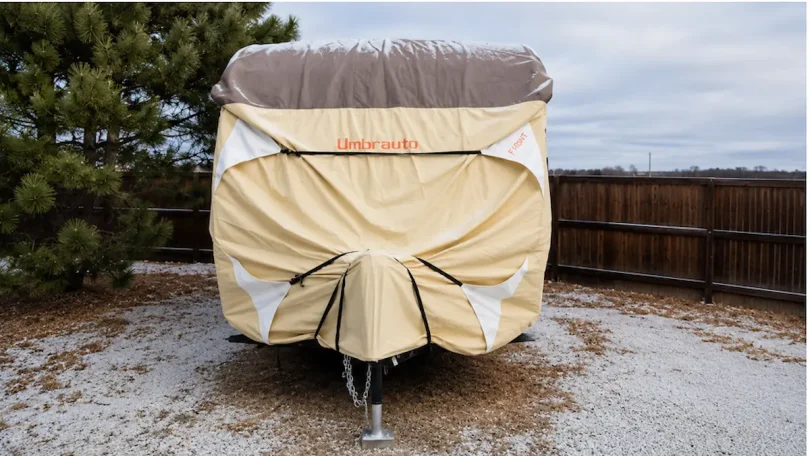

Freezing rain, heavy snow, and hailstones punish exposed RVs every winter season. Winter weather can do real damage to an RV left exposed, and even a few months of unprotected storage can lead to costly repairs. UV damage also increases in winter because sunlight reflects off of snow. Cracked roof vents, faded paint, and warped seals follow close behind. A winter RV cover built for extreme conditions stops this cycle before it starts. The right cover blocks snow weight, repels hail impact, and prevents freeze/thaw moisture intrusion. The wrong one rips apart in the first storm. Choosing correctly means understanding what separates durable, field-tested protection from bargain covers that fail early.
This guide breaks down every feature RV owners need to evaluate before the next blizzard hits.
What Winter Weather Does to an Unprotected RV
Exposed RVs face compounding damage from October through April. Winter snow is one of the most damaging elements because of its weight and the freeze/thaw cycle it creates, where water puddles in gaps on the roof and then freezes, loosening sealants and creating channels for water entry.
The top membrane on most newer RV roofs is rubber or PVC, which handles moisture well, but vent covers, air conditioning shrouds, skylights, and plumbing vents are made of plastic that hail and heavy snow easily damage, especially after UV exposure makes them brittle. A quality cover protects the RV itself and everything mounted on the roof, handling mild to moderate hail storms effectively.
Snow and ice lead to significant moisture issues, and when snow melts, it seeps into the RV and causes internal damage that a proper cover prevents. Roof leaks, delamination, and mold growth cost thousands to repair.
Key Features of a Winter RV Cover for Blizzards
Not every RV cover handles extreme cold. Covers rated for blizzard conditions share specific design elements that separate them from basic seasonal options.
Fabric Construction
Multi-layer polypropylene or polyester with waterproof and UV-resistant coatings offers the best protection. Ripstop weave patterns prevent small tears from expanding under wind stress. A durable top layer must withstand snow and ice, remain waterproof so melting snow does not enter the camper, and stay breathable so trapped moisture does not create mold or mildew.
Owners storing RVs in heavy snow regions should prioritize covers with reinforced roof panels. Heavier covers designed for snow load are ideal for colder climates. Brands like Umbrauto engineer travel trailer covers with Bi-component Hi-tech Fabric and Umbrauto Travel Trailer Cover options that include air vents, gutter covers, and extra windproof ropes.
Wind Resistance
Winter winds destroy inexpensive covers, so reinforced straps, elastic hems, and double-stitched seams are essential for withstanding strong gusts. An ill-fitting cover can billow, scratch, or be blown away entirely. Look for covers with adjustable tension systems on both ends.
How Hail Damages RVs and What Stops It
Hailstones pose a unique threat beyond snow and rain. Even quarter-inch stones can break through kitchen and bathroom vent covers on exposed campers. Plastic components weaken from UV exposure, developing cracks and blisters, and then even slight impacts from branches or hail can cause them to shatter.
A heavy-duty, multi-layer cover absorbs hail impact before stones reach vulnerable surfaces. Multiple layers help protect against dings and scratches. The cover fabric flexes on contact, distributing force across the surface rather than concentrating it.
Owners who store RVs outdoors year-round in hail-prone regions benefit from covers with soft inner linings. These linings cushion the RV’s finish while the outer shell deflects hailstones. Before any storm, retract slideouts to protect slideout roofs and toppers, and retract patio awnings to avoid additional damage.
Choosing the Right Winter RV Cover for Blizzards
Selecting the correct cover requires matching the product to the RV type, storage environment, and regional climate. The following factors drive the decision:
- Accurate measurement: Measure the trailer’s length from bumper to bumper, including ladders or spare tires, but exclude the hitch or tongue.
- Material weight: Polypropylene is lightweight and breathable but suited for dry, mild climates, while polyester adds strength and UV resistance.
- Ventilation design: Built-in air vents stop covers from billowing, and taped seams keep moisture out, preventing mold and mildew.
- Access panels: Zippered roll-up sections for the main entry door allow access without full cover removal.
- Reinforced stress points: Corners, seams, and roof edges take the most abuse during storms.
After narrowing the options, verify the manufacturer’s warranty terms. A strong warranty signals confidence in fabric durability. Umbrauto’s Umbrauto Class C RV Cover lineup, for example, uses 300D Oxford Fabric with upgraded tear-resistant and ripstop construction, paired with zipper access panels and windproof ropes.
Pre-Cover Preparation Checklist
A cover performs only as well as the surface beneath it. Complete these steps before installation:
- Wash and fully dry the RV exterior to prevent trapped debris from scratching paint.
- Inspect roof, window, and door seals, and the underbelly of the RV for cracks or holes that need resealing.
- Retract all slideouts to protect slideout roofs from snow accumulation.
- Purchase separate tire covers if the RV cover does not protect tires.
- Place moisture absorbers inside to control humidity during storage.
- Revisit the RV every few weeks to brush off snow, clear debris, and verify straps remain tight, catching small issues before they become bigger problems.
Skipping these steps reduces cover effectiveness regardless of fabric quality.
Do RV Covers Actually Work Against Extreme Cold
The short answer: yes, when the cover matches the conditions. A sturdy winter cover acts as a shield that prevents snow and ice from contacting the RV’s surface directly, maintaining structure and protecting seals and vents from freezing damage.
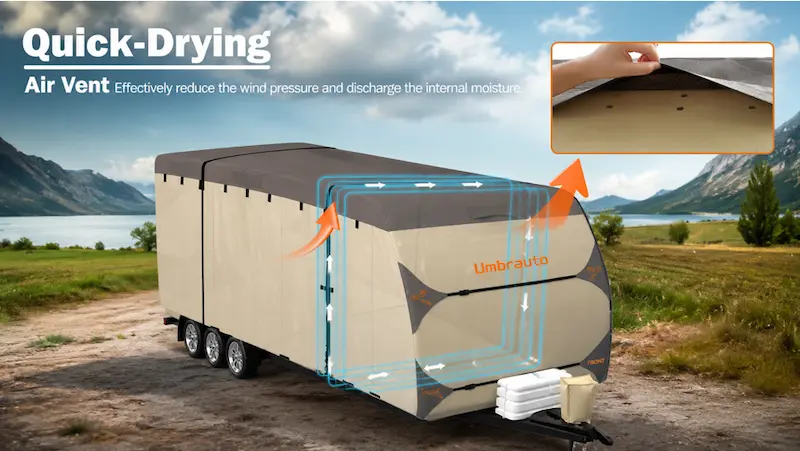
Tarps are not a suitable substitute because they do not breathe, trapping moisture that leads to mold or mildew. Only purpose-built RV covers with breathable panels handle long-term winter storage safely. The best winter covers use breathable fabrics that allow trapped moisture to escape, reducing the risk of mold, mildew, and rust, keeping the interior fresh after months of storage.
Conclusion
A reliable winter RV cover for blizzards and hail is the most cost-effective insurance an RV owner can buy. It blocks snow weight, absorbs hail impact, repels moisture, and stops UV degradation during the longest storage months. Every cover decision should start with accurate measurements and end with verified fabric ratings. Prioritize multi-layer construction, reinforced seams, air vents, and windproof attachment systems. The RVs that emerge from winter in ready-to-roll condition are the ones protected before the first freeze. Take the time now to match the cover to the rig, inspect every seal, and secure every strap. Spring will arrive with no surprises and no repair bills.